Why Vernacular Architecture Matters,
in the North-Western Himalayas Today !
For generations, communities across the Himalayas have shaped dwellings that emerge directly from their surroundings—guided by climate, terrain, and the resources at hand. These time-honored practices embody a careful balance of resilience, sustainability, and cultural expression, offering enduring lessons for the creation of safer and more climate-responsive habitats in mountainous regions.
In the contemporary context of rapid environmental and societal change, the traditional architecture of the North-Western Himalayas assumes renewed relevance. It extends beyond its role as cultural heritage, presenting practical and tested approaches to sustainable living. As mountain landscapes confront increasing pressures from climate change, accelerated development, and recurring natural hazards, the embedded intelligence within these building traditions becomes indispensable.
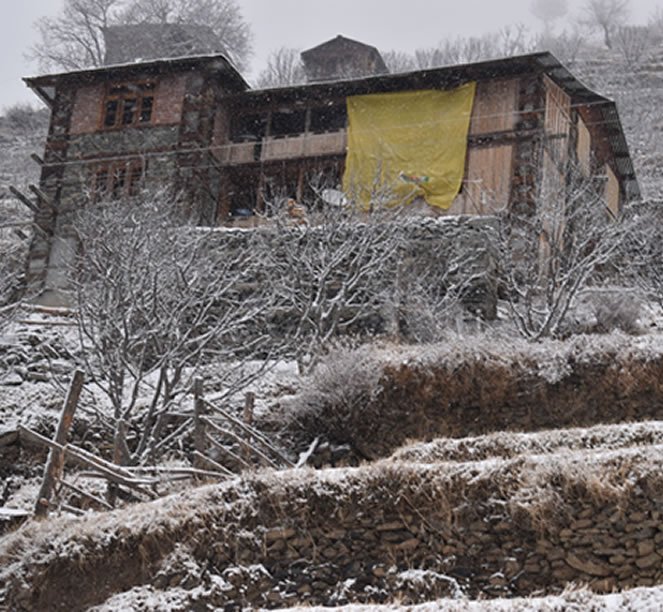
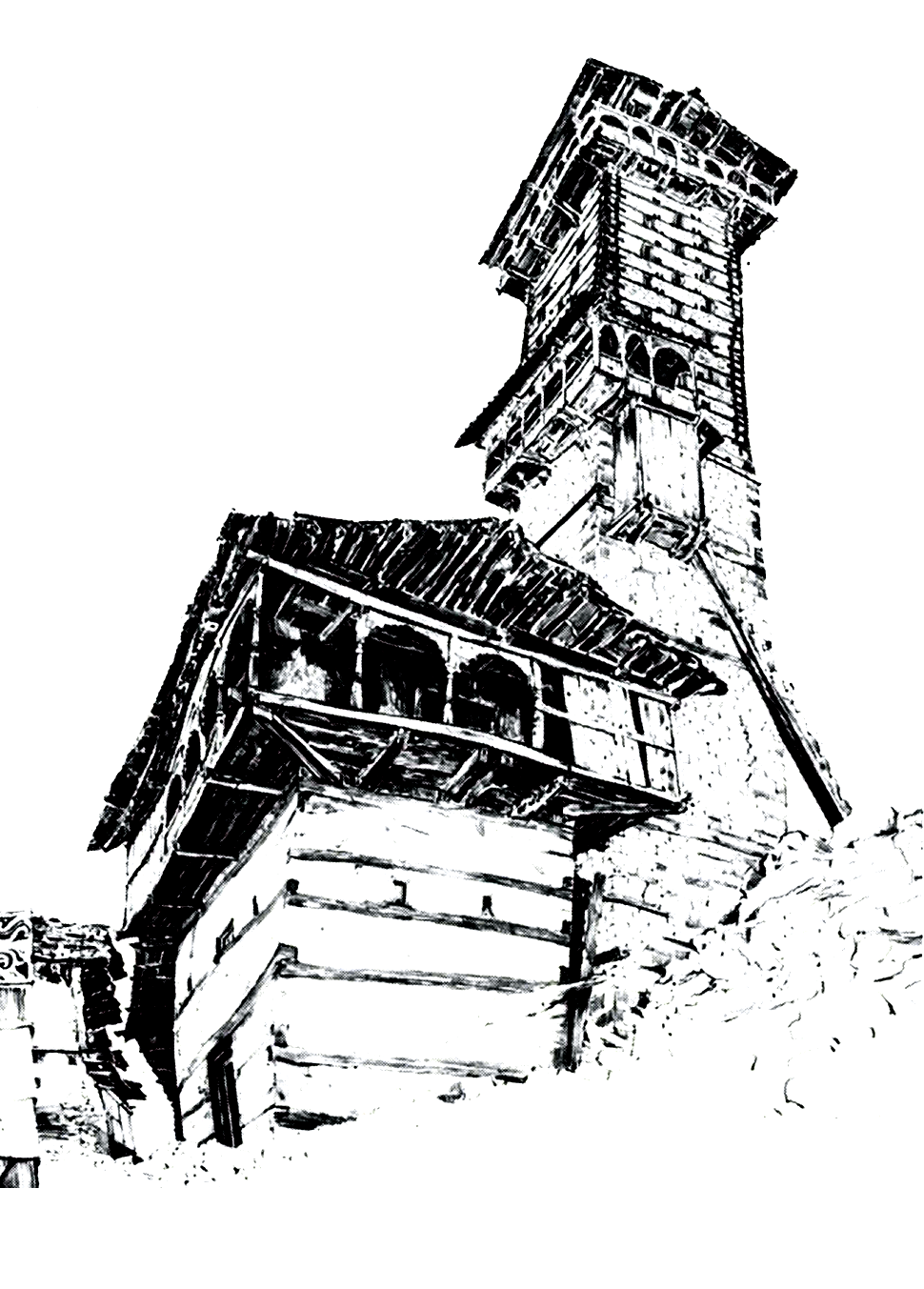
Across regions such as Himachal Pradesh, Jammu & Kashmir, and Uttarakhand, local communities have, over centuries, developed construction systems finely attuned to their environment. Employing materials readily available—stone, timber, and earth—these structures are conceived to harmonize with the landscape. Thermal efficiency is achieved through thick insulating walls, while smaller openings minimize heat loss. Sloping roofs effectively shed heavy snowfall, and timber-integrated masonry introduces the flexibility necessary to withstand seismic forces.
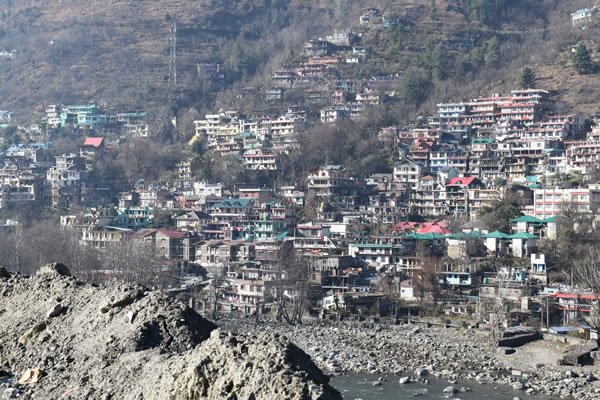
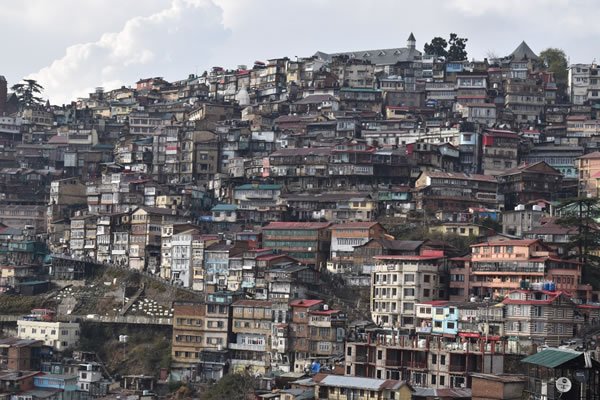
Such built forms exemplify an architecture that negotiates steep topography, unstable soils, and harsh climatic conditions with remarkable efficiency. In contrast to many contemporary buildings that depend on imported materials and energy-intensive processes, these vernacular systems are inherently rooted in local ecology and collective knowledge, ensuring both environmental compatibility and resource efficiency.
In the face of increasing climate uncertainties and disaster risks, traditional construction practices continue to demonstrate the effectiveness of climate-responsive and resilient design. Grounded in generations of local knowledge, these methods reflect low-impact, resource-efficient approaches while sustaining a close relationship between the built environment, ecology, and community life.
Vernacular architecture in the Himalayas, therefore, must be understood not as a relic of the past, but as a dynamic and evolving knowledge system—one that holds the potential to inform sustainable development and shape resilient futures in mountain regions.